Research vs. Reality
It's a jungle out there.

“If you want to understand how the lion hunts, don’t go to the zoo.” — Jim Stengel, former Global Marketing Officer, Procter & Gamble
That quote has always been a fave of mine. Because most of what we call “research” is exactly that — watching lions in cages & calling it insight.
No secret: I’m not a big fan of traditional research. Apologies to my friends & peers in the biz.
Focus groups. Surveys. Trend reports. All master classes in Confirmation Bias. Cherry-picking facts to support your existing beliefs.
I’ve sat on the dark side of the mirror countless times, surrounded by take-out menus, snacks & a fridge full of sodas — watching moderators lead participants exactly where the client wants them to go. I’ve heard the loudest voice hijack the room. Watched the good-do-bes nod in unison to please the moderator for $100 cash.
It’s controlled. It’s safe. Reveals nothing about people.
I’m not fond of surveys either. Statistical analysis & YoY trend lines may look impressive on a pitch deck pie chart, but without understanding context & real-world behavior.
The numbers tell a story of data — not depth. They never give you the richness or texture of a real-world human response.
Self-reporting surveys fail because people often can’t articulate their personal decisions. People generally suck when it comes to articulating why they do what they do. Especially when emotions are driving the decision.
Plus, consumers are hyper-aware of how their answers portray them. & are every ready to feed you exactly what they think you want to hear.
I’ve witnessed creative campaigns die a painful death because participants couldn’t recall copy claims verbatim — from a 30-second commercial they saw exactly once.
Then there’s the say-do gap. Product reviews. Focus groups. Polls. Respondents swear six ways till Sunday they always buy sustainably — then grab the cheapest, most wasteful option on the shelf. Say they’ll vote for candidate A then put candidate B in the White House. We all know how that’s turned out!
They’ll you what they think they should do, then do the exact opposite.
“The gap between what consumers say & what they actually do isn’t just growing — it’s become a chasm that’s swallowing marketing budgets whole,” writes Rashed Chowdhury for Orchard Market Research.
We never actually learn the why behind the response. We miss the patterns, tensions, & contradictions that expose human truths. As Matt Klein of ZINE & Reddit puts it: “There’s always discrepancy, which is valuable intel.”
Here’s the biological kicker: consumers are hard-wired for negativity. Our ancestral survival depended on identifying threats before some saber-tooth tiger had us for dinner. Expose people to a new idea & their first instinct is always No. Nobody wants to be wrong. Too risky.
Traditional research doesn’t just capture that bias — it amplifies it.
I honestly can’t recall a single innovation — or revelation — that came out of a focus group.
& yet. The industry keeps doubling down.
I was recently introduced to a hot new AI-powered trend tracking tool — billed as the future of consumer insight.
It boasts the ability to analyze billions of publicly available emerging signals, spotlight growing categories & deliver predictions gleaned from TikTok & Instagram posts, Google searches & AI synthesis. The words “publicly available” are a dead giveaway as to value.
It was designed to answer the burning questions on every brand CEO & CMO’s mind:
What’s next? Who owns the space? How do I get in on it?
The hot new beauty trends it predicted. Lip serum. Under-eye masks. Red light therapy. Glowy skin. The blurring of boundaries between makeup & skincare.
Hello?
Buried in the fine print: “The trends highlighted in this report are what we consider ‘safe bets’ — selected using consumer awareness across various platforms to uncover opportunities with low risk.”
Low risk. In other words: not new. Not surprising. Not a competitive advantage. Just the view from the cage.
Henry Ford said it best: “If I had asked my customers what they wanted, they would have said a faster horse.”
The best ideas don’t come from asking people what they want. They come from watching what people do, feeling what they feel & having the courage to act — even when the data says stay put.
Which brings me back to Jim Stengel.
It’s a jungle out there. & creating new products & ideas requires casting off your expectations & looking for the surprises hidden in the tall grass. The unknown.
Go where your consumer goes. Not to interview them — to watch them when no one is looking at them. Except you.
Ride the bus. Sit in a waiting room. Watch for the workarounds, frustrations, improvised solutions. Those are your briefs. The moment someone does something unexpected to solve a problem you didn’t know they had — that’s your product. That’s your campaign.
You’re hunting for the gap between what people say, what people do & what people feel but can’t articulate. That third one is the gold. It lives not in answers to your questions, but in the unguarded, unscripted moments of real life.
The evidence is everywhere, if you’re willing to look.
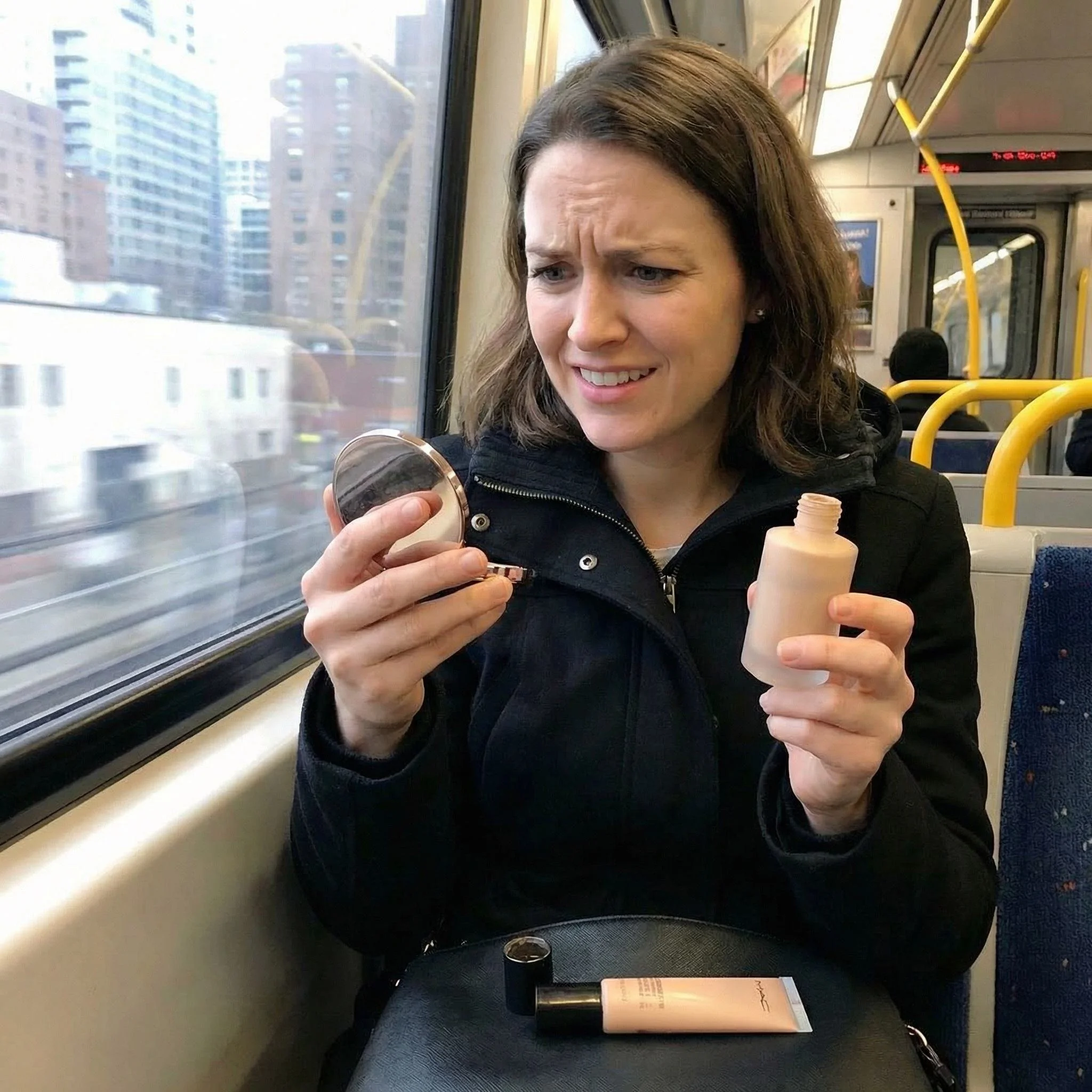
One of my favorite habitats? Metro North Railroad. Have you ever observed a woman on a commuter train trying to apply her makeup — mirror in one hand, foundation bottle in the other, desperately in need of a third hand? That’s a product brief. No survey required.
In 1994, Procter & Gamble observed women cleaning their kitchen floors at home. They noticed that they generally sweep their kitchen floor before they mopped it. The problem was not lack of water – but that excess water slops dirt around. Swiffer combined sweeping & mopping into a single mess-free act, ending up with a cleaner floor overall. A billion-dollar idea born not from a questionnaire, but from watching someone clean a floor.
OXO Good Grips was born from watching a man struggle to peel vegetables because his wife had arthritis. A moment of quiet domestic frustration became one of the most beloved — & copied — product lines in kitchen history. Universal design hiding in plain sight.
Airbnb’s early breakthrough didn’t come from asking travelers how they felt about room service or the lobby decor. It came when Brian & Joe who needed money for rent, bought 3 air mattresses with breakfast included, set up a website & hosted people for $80 a night.
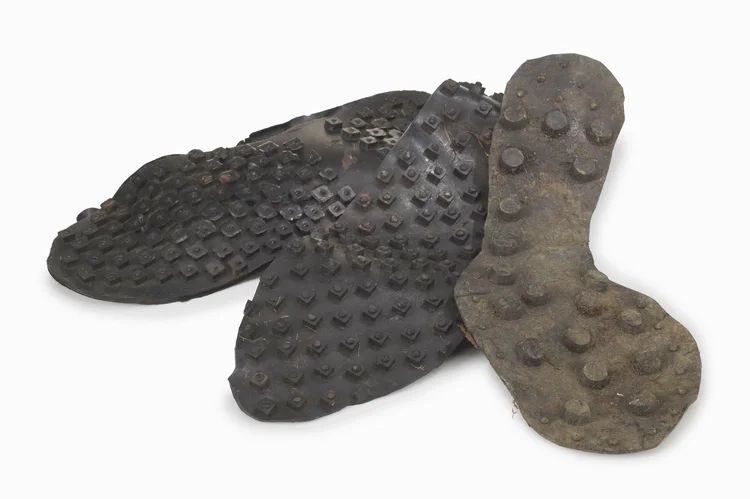
Nike’s earliest running shoe innovations weren’t born in a research lab. They came when Bill Bowerman set out to shave ounces off shoes to help runners slash seconds off their times. His first guinea pig? Phil Knight. Bowerman sought to design a shoe with excellent traction on multiple surfaces, minus metal spikes. The solve came over breakfast in 1970, as he contemplated the syrup-cradling depressions of the waffle on his plate. “What if you reversed the pattern & formed a material with raised waffle-grid nubs?” he wondered. He subsequently took the family waffle iron & substituted melted urethane for batter. Lesson: Just do it.
In every case, the insight was already there. Hiding in plain sight. Waiting for someone to show up, notice & pay attention.
That’s the practice. Show up. Observe. Look for the tension between what people say & what they actually do – in real life. Hunt for the workaround — the improvised, the jury-rigged, the “I always do this weird thing because nothing else works.”
That weird thing? That’s your brief That’s your inspiration. Your innovation.
In an age of dashboards, metrics & Ai, intuition, ambiguity & lived experience still matter Maybe more than ever. That’s where humans live.
That’s not research. That’s hunting. Like a lion hunts. No zoo necessary.
Give ‘em what they never knew they wanted. — Diana Vreeland
Let’s go hunting…Best Robin